Terragrunt - DRY Providers
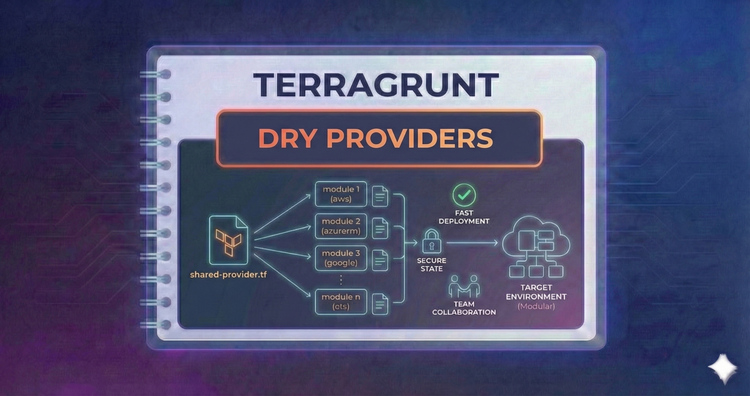
Instead of copying provider.tf files everywhere, we'll use the generate block. Learn to define provider versions and credentials in a single root file, injecting them into every module automatically to ensure consistency across your fleet.
Terragrunt - DRY Backends
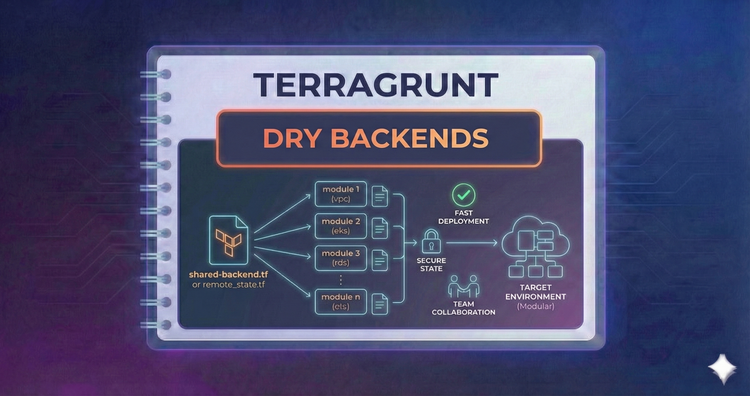
Defining S3 buckets in every folder is error-prone. We’ll use the remote_state block to define backend logic once at the root, allowing every child module to automatically inherit and configure its own state path dynamically.
Terragrunt - The terragrunt.hcl File
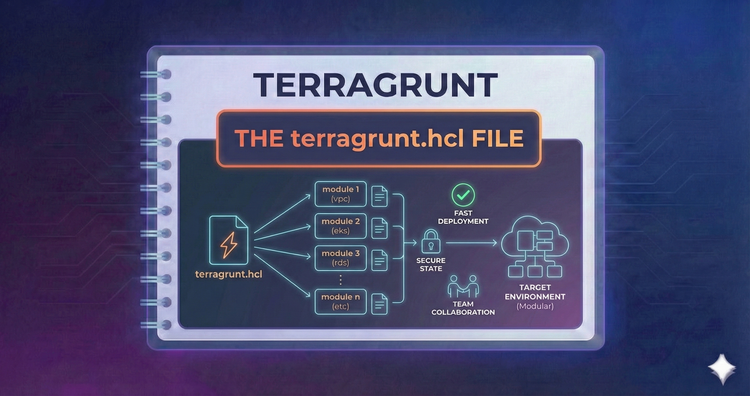
This file is the heart of your configuration, replacing standard .tf definitions. We’ll examine how this single entry point defines where your Terraform code lives, what inputs it needs, and how it inherits logic from parent directories.
Terragrunt - The Wrapper Concept
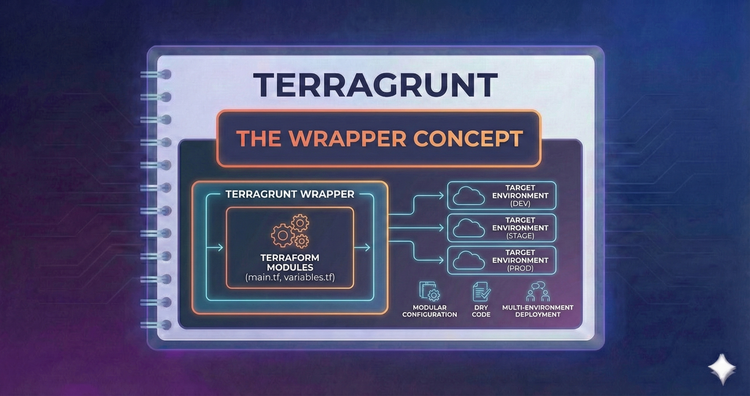
Terragrunt isn't a replacement; it’s a power-up. Discover how it wraps the standard Terraform binary to dynamically generate configurations, inject arguments, and handle backend logic before handing control over to the core tool you already know.
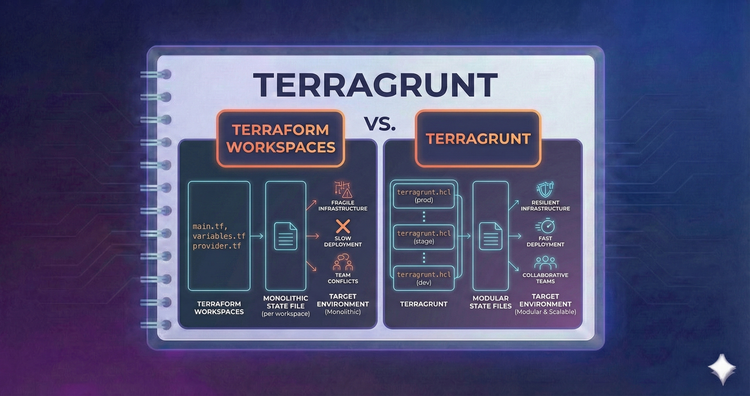
Terragrunt - Terragrunt vs. Terraform Workspaces
Workspaces seem easy for environments, but they share the same backend and plugins, making multi-account isolation difficult. We’ll analyze why directory-based separation is safer and more robust for enterprise scale than CLI workspaces.
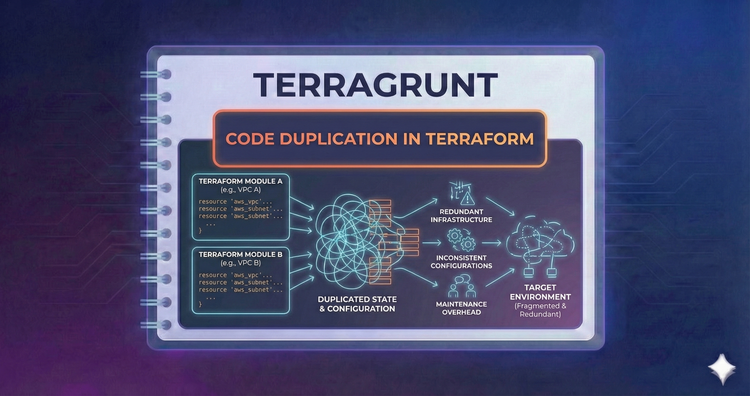
Terragrunt - Code Duplication in Terraform
Copy-pasting provider blocks and backend configs across hundreds of folders is a maintenance nightmare. Learn how native Terraform forces this redundancy and why solving it is the first step toward scalable Infrastructure as Code.
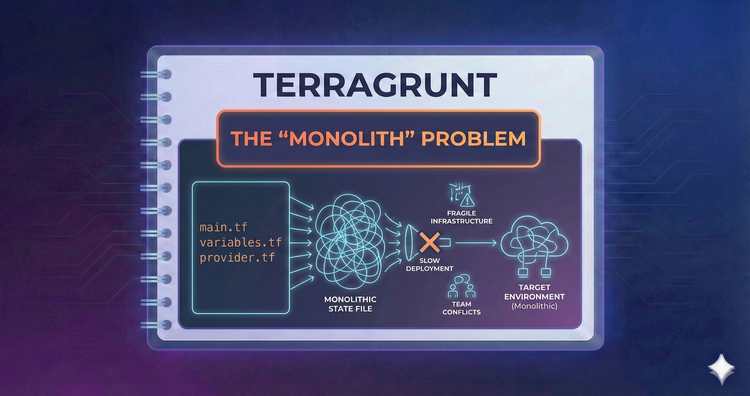
Terragrunt - The "Monolith" Problem
Managing massive state files is risky; one error can break your entire infrastructure. We’ll explore why breaking infrastructure into smaller, isolated units reduces blast radius and speeds up deployments compared to giant "all-in-one" states.