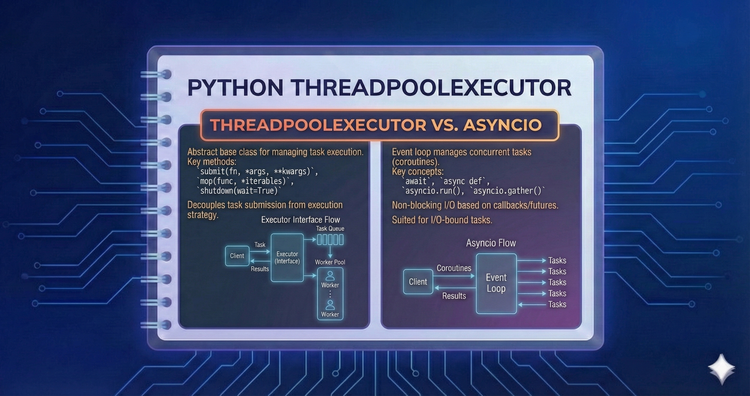
Python ThreadPoolExecutor - ThreadPoolExecutor vs. asyncio
Threads aren't the only way to handle I/O. We compare ThreadPoolExecutor to asyncio, clarifying when to use pre-emptive threading versus cooperative multitasking for modern apps.
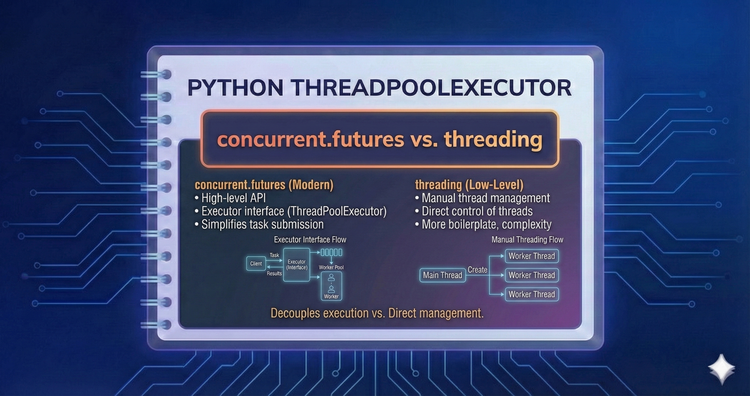
Python ThreadPoolExecutor - concurrent.futures vs. threading
Why use concurrent.futures over the old threading module? We demonstrate the manual boilerplate required by the legacy approach and how the Executor interface abstracts away the messy details.
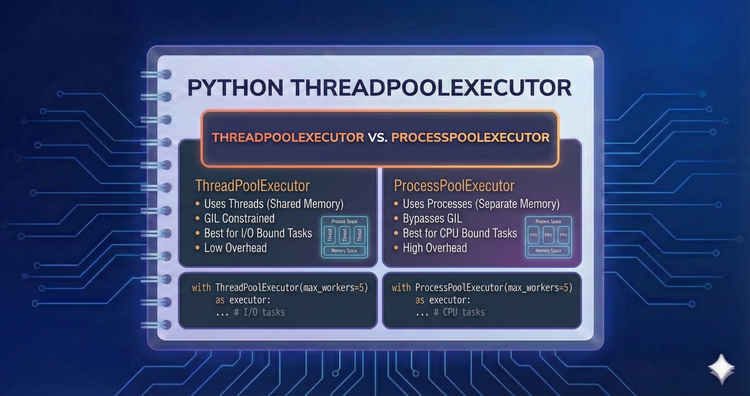
Python ThreadPoolExecutor - ThreadPoolExecutor vs. ProcessPoolExecutor
ThreadPoolExecutor isn't for everything. We contrast it with ProcessPoolExecutor, showing why CPU-heavy tasks need processes to bypass the GIL, while threads remain the superior choice for network and file I/O.
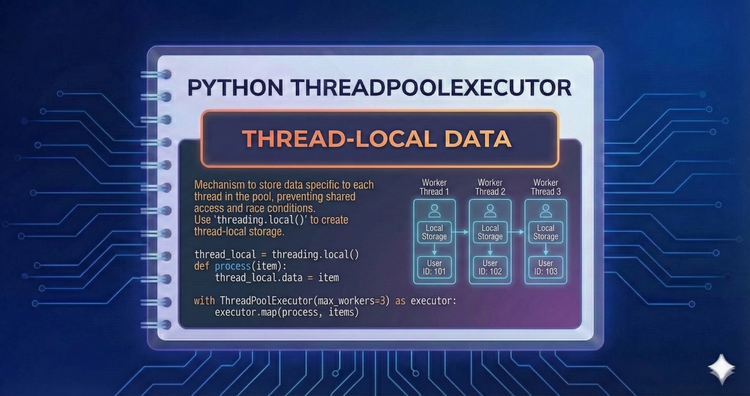
Python ThreadPoolExecutor - Thread-Local Data
Sometimes you need "global" variables that are unique to each thread. threading.local() creates thread-specific storage, allowing workers to maintain their own isolated state (like database connections) without interference.
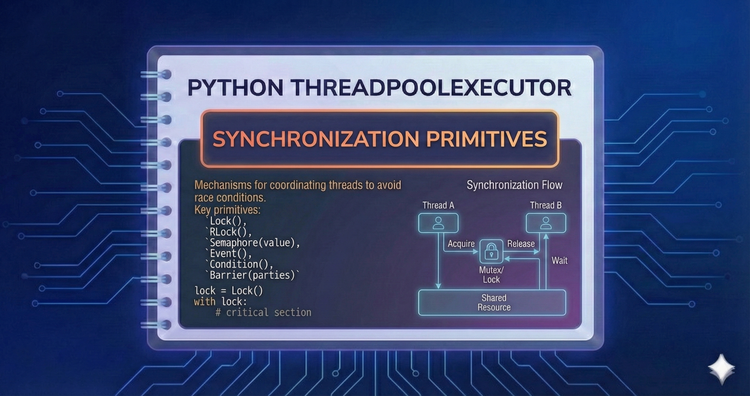
Python ThreadPoolExecutor - Synchronization Primitives
To protect critical sections, we use threading.Lock and RLock. These tools enforce mutual exclusion, acting like a traffic light that ensures only one thread can enter a protected block of code at a time.
Python ThreadPoolExecutor - Critical Sections
A critical section is a block of code that accesses a shared resource and must not be interrupted by other threads. We learn to identify these sensitive areas in your codebase where multiple threads overlapping would cause inconsistency.
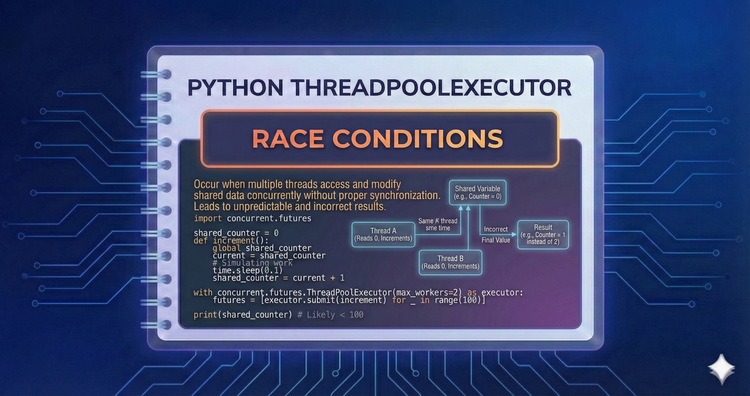
Python ThreadPoolExecutor - Race Conditions
When threads modify shared data simultaneously, the final outcome depends on the unpredictable order of execution. We visualize how these "races" occur during simple operations like x += 1 and how they corrupt data integrity.
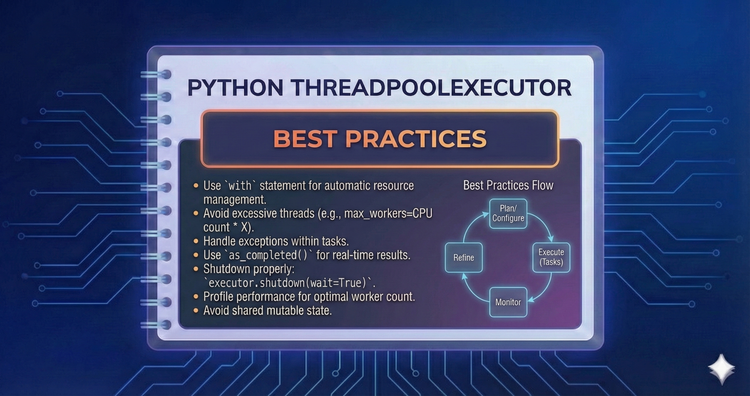
Python ThreadPoolExecutor - Best Practices
Relying on future.result() is risky if you forget to call it. We build a robust @safe_run decorator that wraps your functions, catching and logging errors immediately within the thread to ensure no failure goes unnoticed.
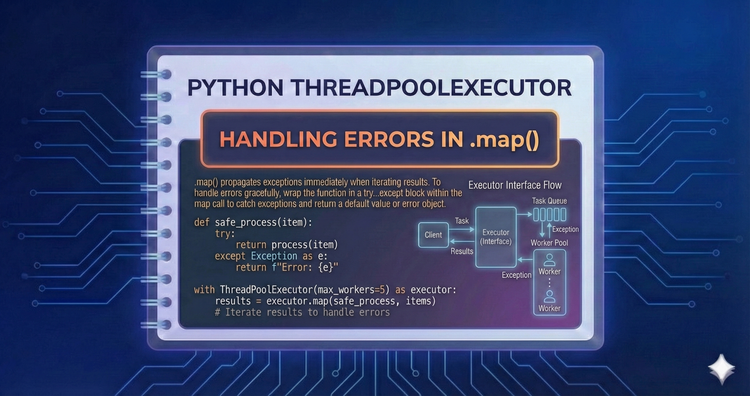
Python ThreadPoolExecutor - Handling Errors in .map()
When using .map(), results are yielded in order. If a task fails, the iterator raises the exception when reaching that specific item. We discuss how this interruption stops the loop and strategies to iterate safely over partial successes.
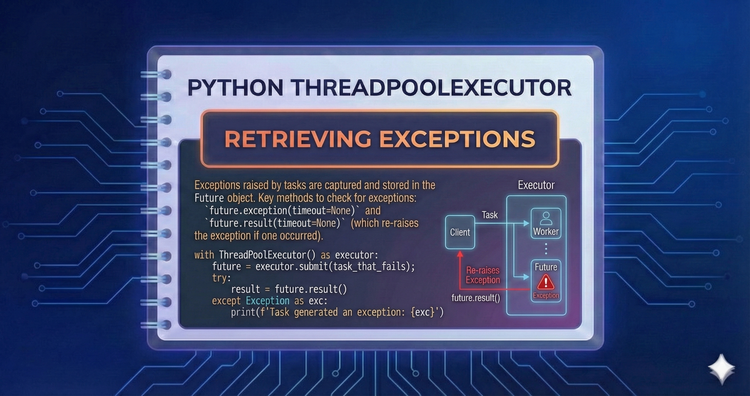
Python ThreadPoolExecutor - Retrieving Exceptions
Exceptions aren't lost; they are captured by the Future. We demonstrate how calling .result() acts as a bridge, re-raising the stored exception in the main thread, allowing you to catch and handle thread crashes just like local errors.