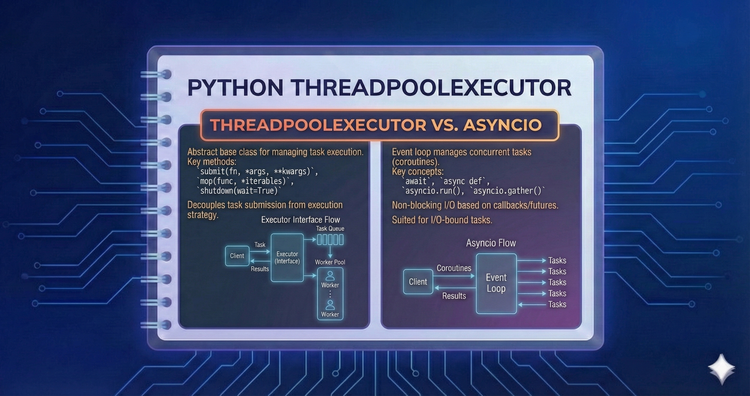
Python ThreadPoolExecutor - ThreadPoolExecutor vs. asyncio
Threads aren't the only way to handle I/O. We compare ThreadPoolExecutor to asyncio, clarifying when to use pre-emptive threading versus cooperative multitasking for modern apps.
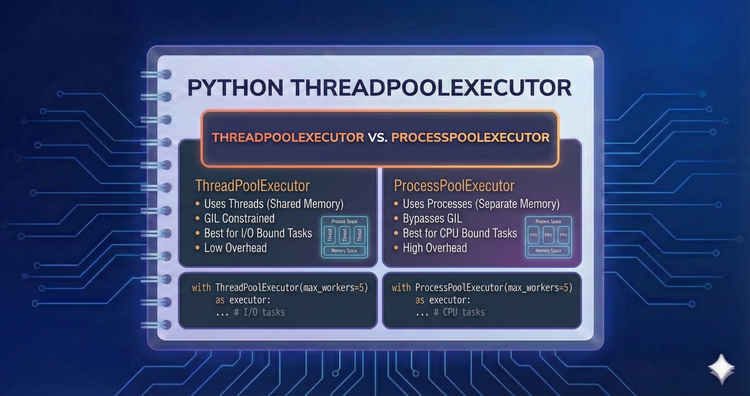
Python ThreadPoolExecutor - ThreadPoolExecutor vs. ProcessPoolExecutor
ThreadPoolExecutor isn't for everything. We contrast it with ProcessPoolExecutor, showing why CPU-heavy tasks need processes to bypass the GIL, while threads remain the superior choice for network and file I/O.
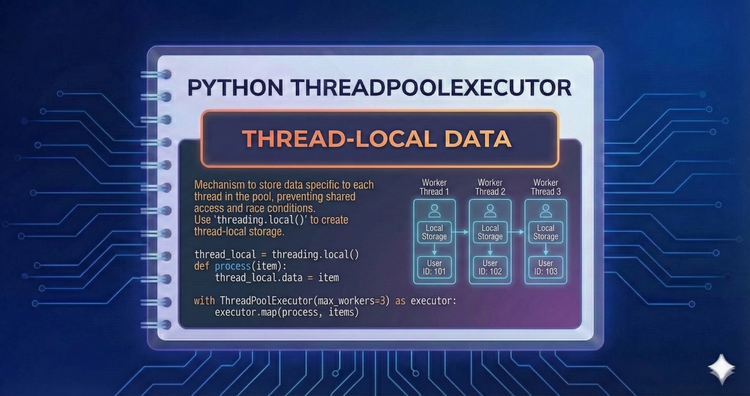
Python ThreadPoolExecutor - Thread-Local Data
Sometimes you need "global" variables that are unique to each thread. threading.local() creates thread-specific storage, allowing workers to maintain their own isolated state (like database connections) without interference.
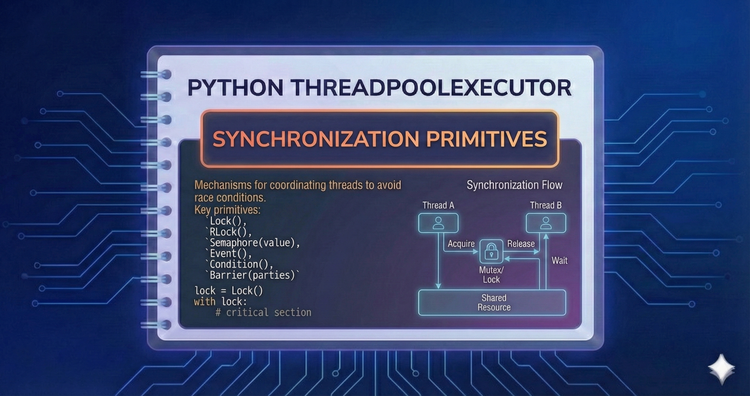
Python ThreadPoolExecutor - Synchronization Primitives
To protect critical sections, we use threading.Lock and RLock. These tools enforce mutual exclusion, acting like a traffic light that ensures only one thread can enter a protected block of code at a time.
Python ThreadPoolExecutor - Critical Sections
A critical section is a block of code that accesses a shared resource and must not be interrupted by other threads. We learn to identify these sensitive areas in your codebase where multiple threads overlapping would cause inconsistency.

Member discussion