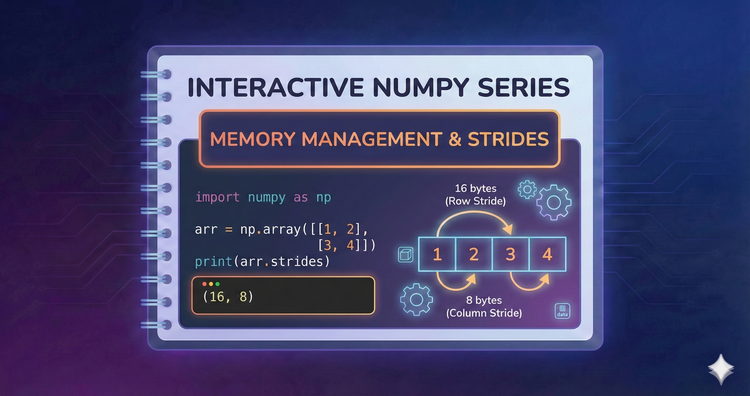
Interactive NumPy Series - Memory Management and Strides
Peek under the hood at how NumPy traverses memory. Understanding strides and memory layout (C vs. Fortran order) is the secret to optimizing performance and avoiding unnecessary data copying.
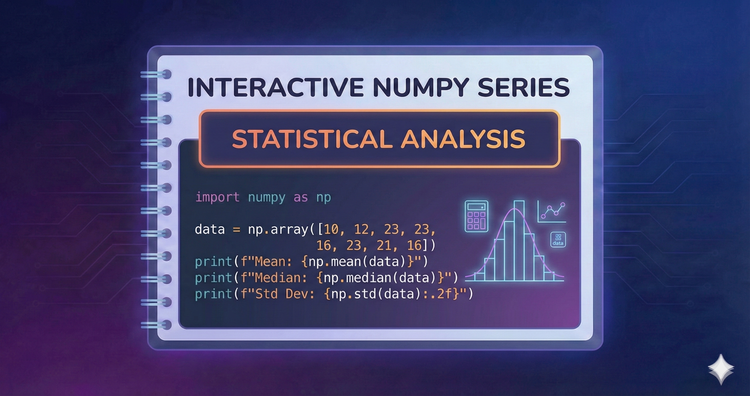
Interactive NumPy Series - Statistical Analysis
Extract insights from noise. We use aggregation functions to calculate histograms, correlations, and percentiles, rapidly summarizing millions of data points along specific axes.
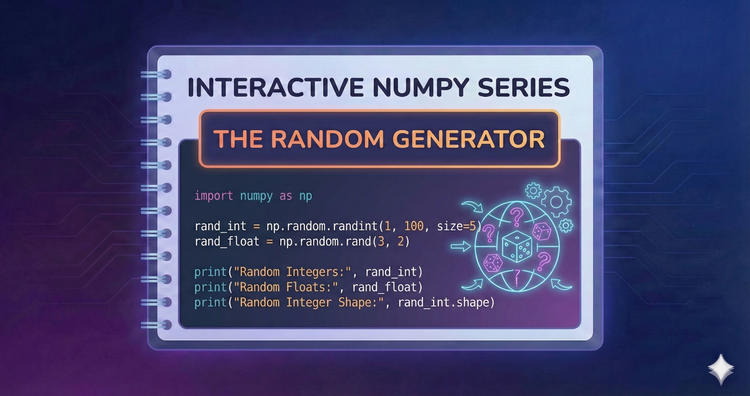
Interactive NumPy Series - The Random Generator
Move beyond simple rand. We use the modern Generator API to sample from rigorous statistical distributions (Normal, Poisson), ensuring reproducible and scientifically valid simulations.
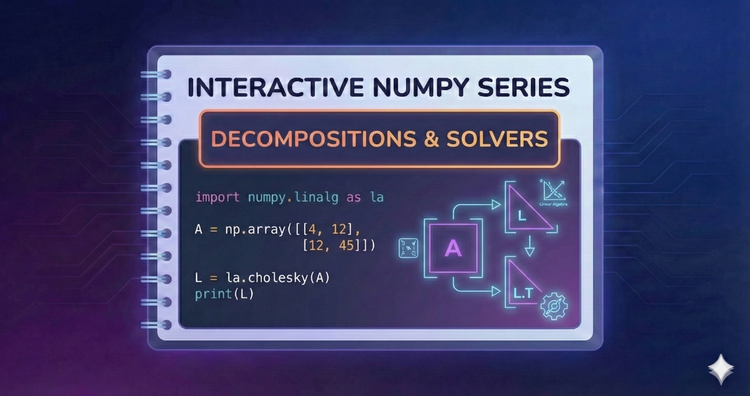
Interactive NumPy Series - Decompositions and Solvers
Dive into advanced linear algebra. We explore eigenvalues, singular value decomposition (SVD), and solving linear systems—tools essential for dimensionality reduction and physics simulations.
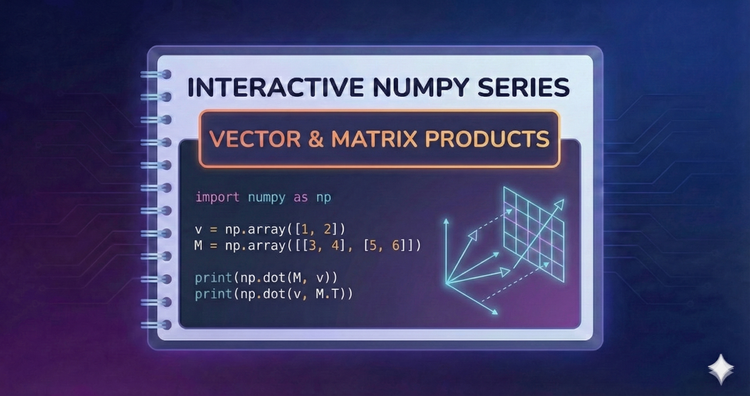
Interactive NumPy Series - Vector and Matrix Products
The engine of ML. We differentiate between dot products, inner/outer products, and matrix multiplication (matmul), utilizing the @ operator to transform vector spaces efficiently.
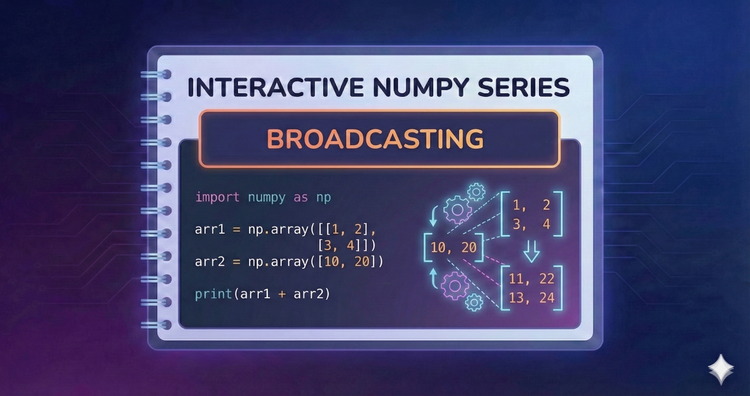
Interactive NumPy Series - Broadcasting
NumPy’s "magic" feature allows arithmetic between arrays of different shapes. We demystify the rules that align dimensions automatically, enabling concise code without manual data replication.
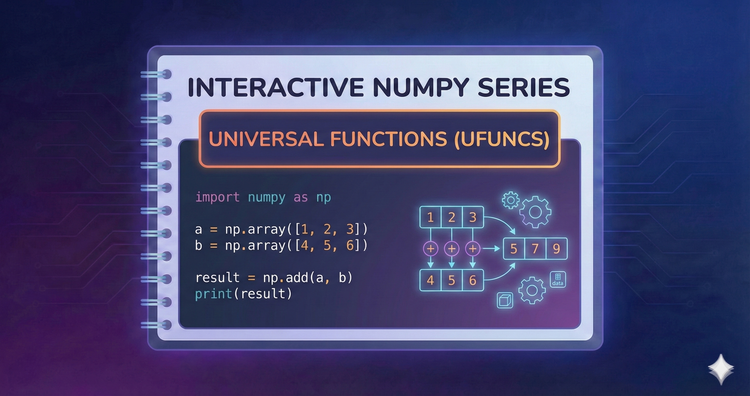
Interactive NumPy Series - Universal Functions (ufuncs)
Perform element-wise math across entire arrays instantly. From basic arithmetic to trig functions (sin, exp), ufuncs are the key to NumPy’s speed, delegating heavy computation to optimized C-loops.
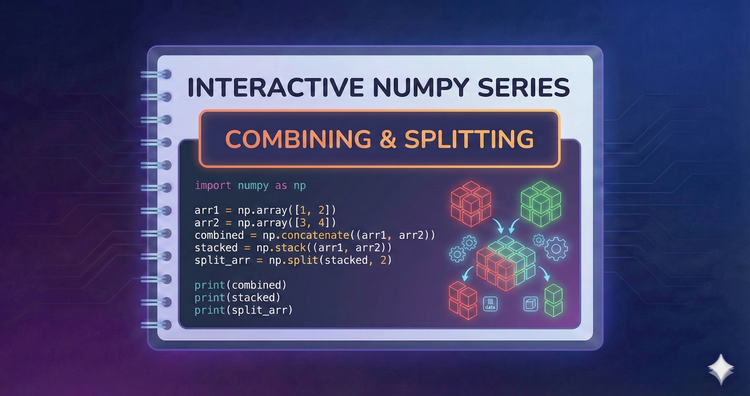
Interactive NumPy Series - Combining and Splitting
Learn to assemble complex datasets by stacking arrays vertically or horizontally using vstack and concatenate. We also cover splitting large arrays into manageable sub-sections for processing or validation.
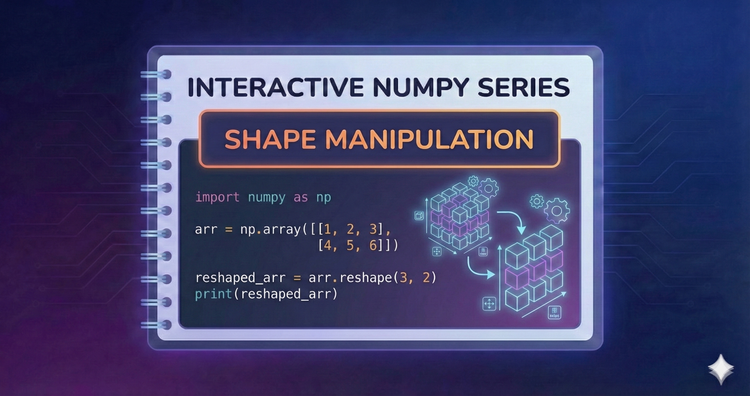
Interactive NumPy Series - Shape Manipulation
Data rarely arrives in the right format. Master reshape, flatten, and expand_dims to alter array dimensions and geometry, ensuring your data aligns perfectly with the mathematical operations you need to perform.
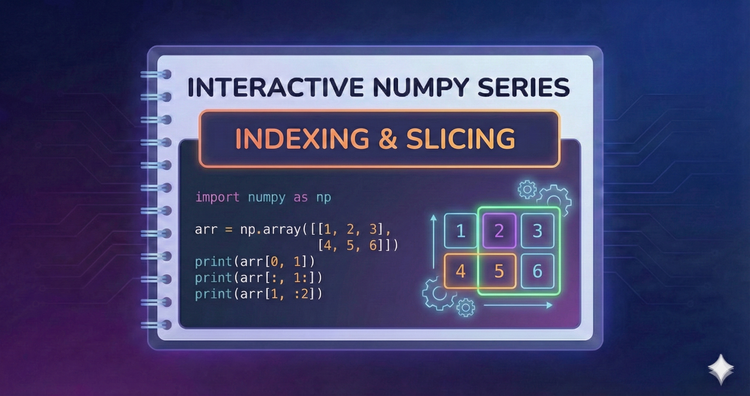
Interactive NumPy Series - Indexing and Slicing
Accessing data is foundational. We cover standard indexing, view-versus-copy semantics, and boolean masking to filter data based on conditions—critical for cleaning and preparing datasets for analysis.