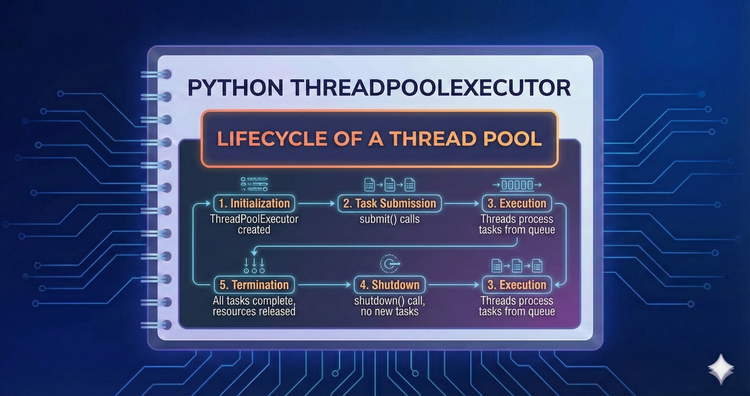
Python ThreadPoolExecutor - Lifecycle of a Thread Pool
A pool goes through distinct stages: initialization, task submission, and shutdown. We examine the internal state at each stage and how to manually control the lifecycle using .shutdown(wait=True) versus relying on the garbage collector.
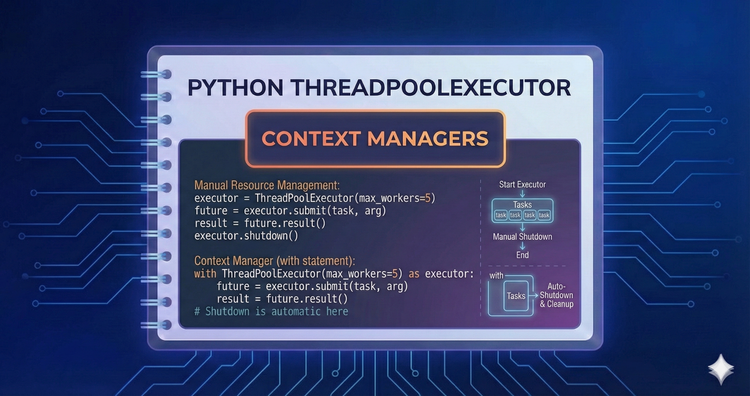
Python ThreadPoolExecutor - Context Managers
Using the with statement ensures threads are cleaned up automatically. We cover the initialization and shutdown of the pool, ensuring that system resources are released gracefully even if errors occur.
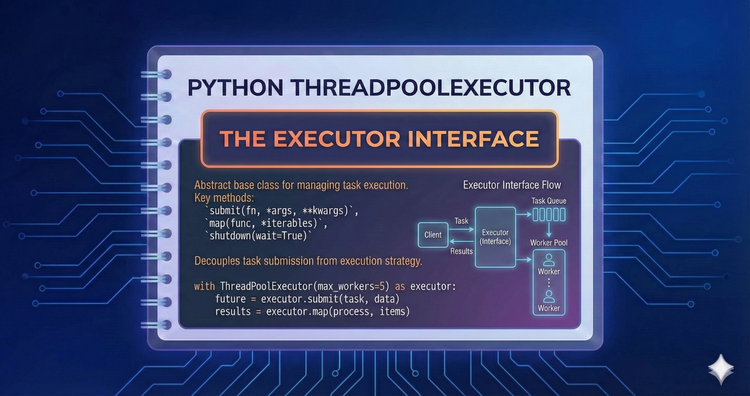
Python ThreadPoolExecutor - The Executor Interface
The concurrent.futures module provides a high-level abstraction for threading. We introduce the Executor class, which replaces complex manual thread management with a clean, consistent, and modern API.
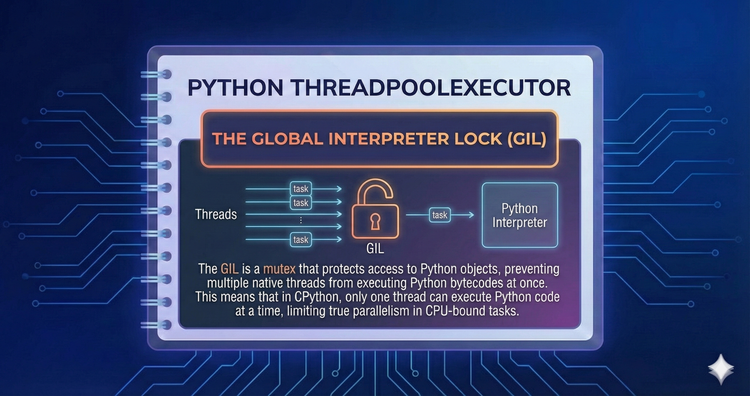
Python ThreadPoolExecutor - The Global Interpreter Lock (GIL)
The GIL is Python's controversial mutex that allows only one thread to control the interpreter at a time. Learn why this design limits performance for CPU-bound tasks but leaves I/O-bound tasks largely unaffected.
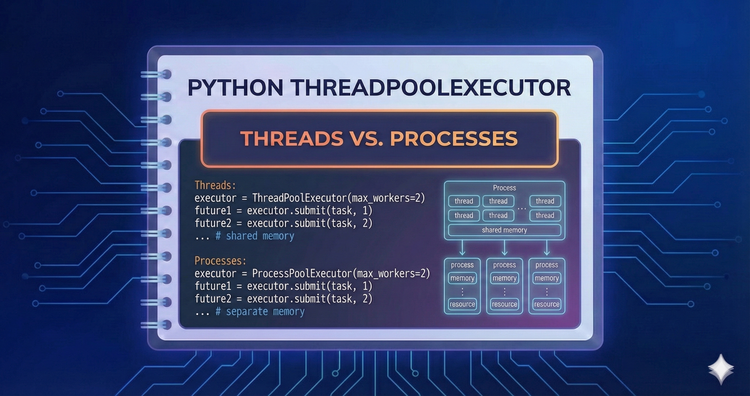
Python ThreadPoolExecutor - Threads vs. Processes
Threads share memory, while processes run in separate memory spaces. We explore why threads are lightweight and ideal for I/O tasks, contrasting them with the heavier resource needs and serialization overhead of multiprocessing.
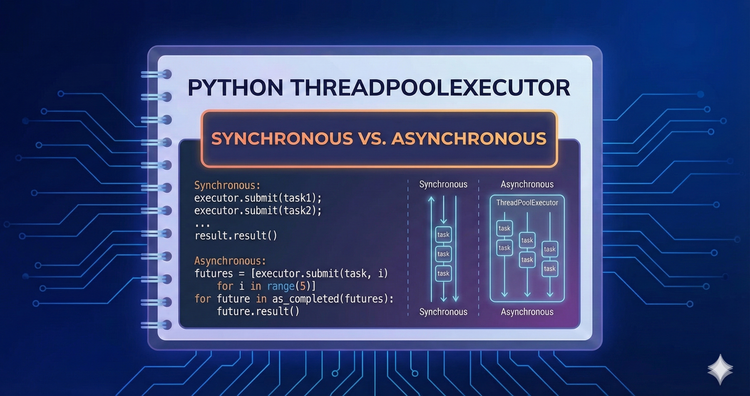
Python ThreadPoolExecutor - Synchronous vs. Asynchronous
Understanding blocking code is the first step. We distinguish between linear execution and parallel tasks to see why waiting on I/O operations (like network requests) wastes valuable time in standard, synchronous Python scripts.
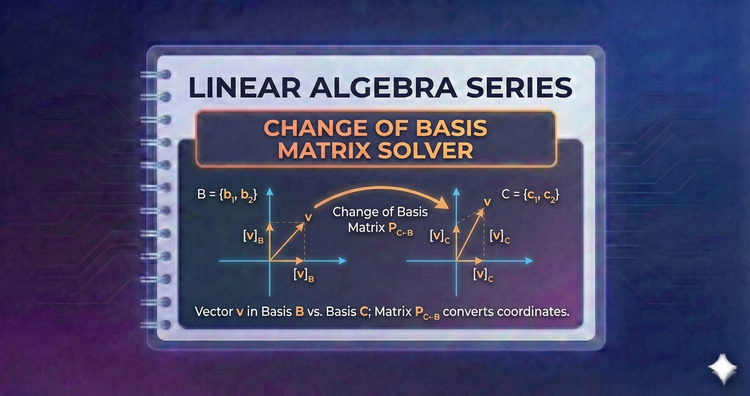
Linear Algebra Series - Change of Basis Matrix Solver
Interactive Solver for the Change of Basis Matrix
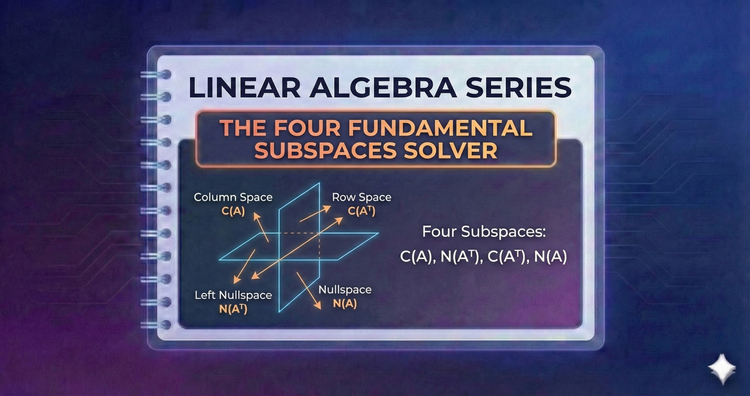
Linear Algebra Series - The Four Fundamental Subspaces Solver
Interactive Solver for The Four Fundamental Subspaces - Column Space, Row Space, Null Space and the Left Null Space
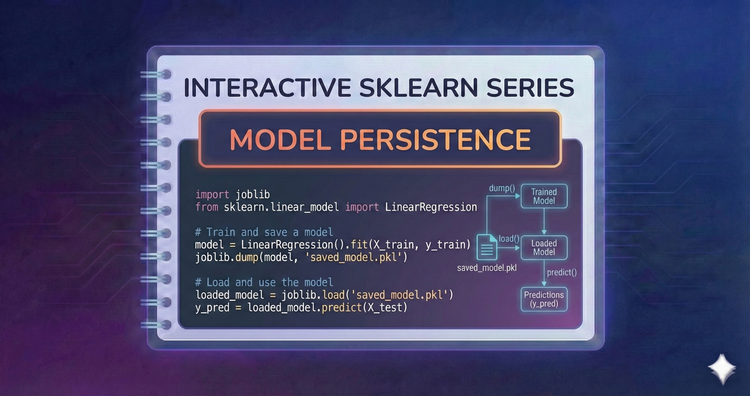
Interactive SkLearn Series - Model Persistence
Save your work. We’ll use joblib to serialize trained models to disk, allowing you to reload them later for inference without needing to retrain from scratch.
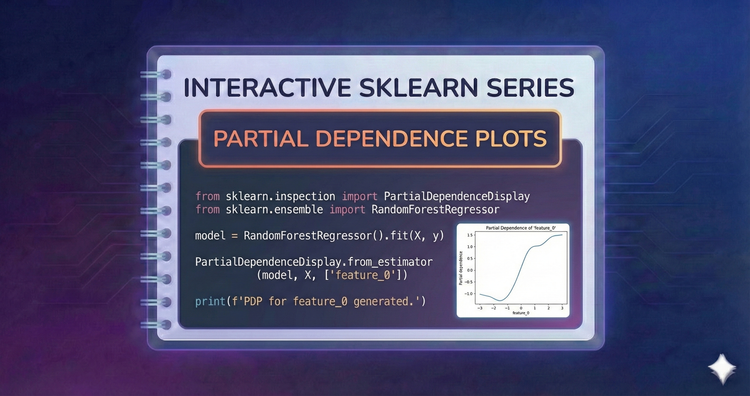
Interactive SkLearn Series - Partial Dependence Plots
Visualize cause and effect. We’ll generate Partial Dependence Plots (PDPs) to see exactly how changing a specific feature impacts the model’s predicted outcome, holding others constant.